

State police: Joint lawmakers, executive panel concludes work
State police: Joint lawmakers, executive panel concludes work


State police: Joint lawmakers, executive panel concludes work
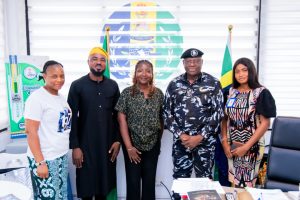
•Minister: Nigerians must unite to fight terrorism
•U.S. reaffirms support
State police may soon come to fruition as part of efforts to address security challenges.
The actualisation plan has reached a significant milestone as more than three months of consultations among the Executive, the Legislature, security agencies, particularly the police, and other stakeholders, were concluded at the Presidential Villa.
According to the arrangement, the first step will be a Constitution Amendment Bill to be passed by the National Assembly and transmitted to the Houses of Assembly for concurrence.
The second step will involve developing the framework for the new structure.
Yesterday’s meeting was chaired by the Chief of Staff to the President, Femi Gbajabiamila.
In attendance were Deputy President of the Senate, Barau Jibrin; Deputy Speaker of the House of Representatives, Benjamin Kalu – both chairmen of the Constitution Review Committees in their respective chambers, Minister of Justice and Attorney General of the Federation, Lateef Fagbemi (SAN) and Inspector-General of Police, Tunji Disu.
Also yesterday, the Federal Government called on all Nigerians to unite in the fight against terrorism, stressing that an attack on one person is an attack on all.
Minister of Information and National Orientation Mohammed Idris said: “Terrorism has no tribe, no religion, and no political affiliation. Its only purpose is destruction.”
In the same vein, the United States (U.S.) pledged its continued support for Nigeria in the fight against terrorism.
U.S. Secretary of State Marco Rubio said: “Where many were very concerned about violence, we are now actively engaged in counterterrorism cooperation with the Nigerian government and Nigerian security forces.”
In a statement on the meeting at the Presidential Villa, presidential adviser on information and strategy, Bayo Onanuga, quoted Gbajabiamila as saying: “We started deliberations in the last three or four months on how to go about the establishment of state police as directed by Mr President.
“Establishing state police is not something that you do with the snap of a finger. There is a lot involved in terms of constitutional and legal requirements, and thank God we have now gained considerable traction.
“Hopefully, the amendment will come shortly, and the details of the amendment will come after that.”
Read Also: UNN inaugural lecture: Nigeria faces ₦236tn UHC funding gap, as Don seeks health system overhaul
The Chief of Staff explained that discussions had advanced to the stage of considering the constitutional amendments needed to pave the way for state police, noting that the enabling legislation would subsequently be enacted.
“Right now, what we are looking at is the constitutional amendment itself, and then the enabling law would follow thereafter.
“That is what we have been deliberating on in the last couple of hours,” he added.
Gbajabiamila said there is a broad consensus across the country on the need for state police, stressing that the current debate is no longer about whether the initiative should be adopted but about creating the appropriate legal and institutional framework for its successful implementation.
He added that President Bola Ahmed Tinubu, who has consistently advocated decentralised policing as a means of strengthening Nigeria’s security architecture, would receive a comprehensive report on the outcome of the meeting.
The meeting formed part of ongoing consultations by the Federal Government aimed at developing a workable framework for state police, a reform expected to strengthen internal security, improve intelligence gathering at the grassroots, and enhance the ability of state governments to respond to emerging security threats.
President Tinubu has repeatedly argued that state police represent a necessary response to Nigeria’s evolving security challenges, maintaining that a decentralised policing system would improve local intelligence gathering and provide better protection for lives and property across the country.
N’Assembly’s readiness
Senate spokesman Yemi Adaramodu said the upper chamber was fully prepared to begin work on the constitutional amendments required to create state police.
He stressed lawmakers’ determination to support President Bola Ahmed Tinubu’s efforts to improve security nationwide.
Adaramodu said the Senate recognised the growing demand for a decentralised policing structure and was committed to ensuring that the necessary legal framework was put in place without delay.
He said: “The Senate is fully prepared to commence the constitutional processes for the establishment of state police without delay.
“The National Assembly is desirous of supporting President Tinubu and the Nigerian people in addressing the country’s security challenges through reforms capable of enhancing law enforcement at the sub-national level.”
He assured that the Senate would provide what he described as the “necessary legislative stamina” to ensure the successful establishment of state police and strengthen the nation’s security architecture.
“The Legislature is desirous of supporting President Bola Ahmed Tinubu and the Nigerian public on this.
“The Senate will ensure that the necessary legislative stamina is accorded the establishment of state police.”
The renewed push for state police comes amid increasing calls from stakeholders, including governors, traditional rulers and security experts, for a more localised policing system to address insecurity, banditry, kidnapping and other violent crimes.
Advocates argue that state-controlled police formations would improve intelligence gathering, response times and community engagement, while opponents have expressed concerns about possible abuse by state governments.
The issue is expected to feature prominently in ongoing constitutional amendment discussions as lawmakers seek lasting solutions to the country’s security challenges.
Fed Govt: let’s unite against terrorism
Defeating terrorism requires a united national response that transcends political, ethno-religious and regional differences, the Federal Government told Nigerians.
All Nigerians, including the media, civil society organisations and security agencies, must join forces to strengthen collaboration in the fight against terrorism and other forms of violent extremism threatening national peace and security, Idris said.
State police framework near completion as constitutional amendment looms
State police: Between necessity and risk
Peace corps backs Tinubu over State Police
Speaking at a news conference in Abuja, he added: “The Federal Government is rallying citizens, the media and security agencies in a united front against terrorism because an attack against one Nigerian is an attack against all Nigerians.”
According to the minister, President Tinubu remains committed to securing the safe return of all kidnap victims, including the abducted schoolchildren and teachers recently taken captive in separate attacks in Oyo and Borno states.
He said: “I wish to assure all Nigerians that the safe return of every child and every teacher currently in captivity remains a top national priority.
“The President has made it clear that no child belongs in captivity and that no effort will be spared in ensuring that those responsible for these heinous crimes are brought to justice.”
Idris said security agencies, working under the direct instruction of the President, have intensified intelligence gathering, surveillance operations and coordinated rescue efforts aimed at securing the release of the victims and bringing the perpetrators to justice.
Highlighting security gains across the country, the minister noted that troops under Operation Hadin Kai in the Northeast have continued to neutralise terrorists, rescue civilians and destroy terrorist infrastructure.
He added that more than 50 terrorists were recently killed in follow-up operations in Borno State, while several high-value targets have been eliminated through coordinated military actions.
The minister further stated that security operations across the Northwest, Northcentral, Southeast and Southsouth regions have led to the dismantling of criminal camps, disruption of kidnapping syndicates and increased protection of critical national assets.
According to the minister, Nigeria’s counterterrorism efforts are yielding results because of improved inter-agency collaboration, intelligence sharing, enhanced surveillance capabilities and stronger international partnerships.
He said: “What distinguishes our current approach is the combination of military pressure, intelligence-led operations, technology, regional cooperation and community engagement.
“This comprehensive strategy is steadily degrading the operational capacity of terrorist and criminal groups.”
The minister also pointed to major judicial breakthroughs in the fight against terrorism, including recent convictions secured against perpetrators of the June 2022 terrorist attack on St. Francis Catholic Church in Owo, Ondo State, where scores of worshippers lost their lives.
He noted that the government has commenced one of the largest terrorism prosecution exercises in Nigeria’s history, with hundreds of terrorism suspects currently undergoing trial under the country’s counterterrorism legal framework.
The minister said: “Justice is an essential pillar of national security. Beyond military operations, the government is ensuring that those involved in acts of terrorism face the full weight of the law.
“The ongoing terrorism trials and recent convictions send a clear message that impunity will not prevail.”
He urged the media to exercise professionalism and restraint in reporting terrorism-related incidents, noting that terrorists often seek publicity and psychological impact through their actions.
“While the media must continue to report accurately and responsibly, we must be careful not to inadvertently amplify the objectives of terrorists.
“Responsible journalism can help deny them the publicity they seek while keeping citizens properly informed,” he said.
The minister urged Nigerians to remain vigilant, support security agencies with credible information and reject narratives designed to divide communities along ethnic, religious or political lines.
At the briefing were the Permanent Secretary in the Federal Ministry of Information and National Orientation, Dr Binyerem C. Ukaire; I-G Disu, represented by Force Public Relations Officer DCP Anthony Placid; Director of Defence Information, Brig.-Gen. Samaila Uba; and Senior Special Assistant to the President on Media and Special Duties, Tunde Rahman.
Others included the Special Adviser to the President on Media and Public Communications, Sunday Dare; Senior Special Assistant on Print Media, Abdulaziz Abdulaziz; and Senior Special Assistant to the President on Public Engagement, Mr Fredrick Nwabufo, among other dignitaries.
Secretary Rubio reaffirmed the U.S. counterterrorism partnership with Nigeria, citing recent joint operations that dealt a major blow to the Islamic State West Africa Province (ISWAP) terrorist network.
Rubio, who made the remarks while speaking on U.S. foreign policy and international security cooperation, said American and Nigerian security agencies recently collaborated in an operation that eliminated a senior global ISIS leader operating from within Nigeria.
The senior ISIS leader, Abu-Bilal al-Minuki, was killed along with several of his lieutenants during a strike on his hideout in the Lake Chad Basin about three weeks ago in a joint operation conducted by Nigerian and U.S. forces.
According to the U.S. Secretary of State, concerns previously expressed by some groups regarding violence allegedly targeted at Christian communities in Nigeria have strengthened security engagement between both countries.
Rubio said the partnership had already produced tangible results in the battle against terrorism.
He explained that the partnership included “a joint operation a couple of weeks ago that took out the number two leader of global ISIS, operating from inside the country, and that continues.”
Rubio’s remarks underscored growing security collaboration between Nigeria and the United States as both countries confront evolving terrorist threats in West Africa and the wider Sahel region.
Nigeria has remained at the forefront of counterterrorism efforts in West Africa, confronting groups linked to Boko Haram, ISWAP and other violent extremist networks.
The country has also consistently advocated stronger international cooperation to tackle terrorism, illicit arms trafficking and cross-border criminal activities affecting the region.
The latest U.S. acknowledgement comes amid renewed international focus on security challenges across the Lake Chad Basin, the Sahel and parts of West Africa.
The United States and Nigeria have maintained a longstanding cooperation in security, peacekeeping, economic development and democratic governance.
Rubio’s remarks also reflected growing international recognition of Nigeria’s strategic importance in promoting peace, stability and counterterrorism efforts across Africa.
