

Stability Over Spectacle, Assessing Godswill Akpabio’s Senate Leadership
Stability Over Spectacle, Assessing Godswill Akpabio’s Senate Leadership

Politics in Nigeria is rarely quiet. It is intense, fast moving, and often shaped by headlines before full facts emerge. In such an environment, steady governance the patient work of building consensus, managing differences, and passing laws can easily be overshadowed by controversy.
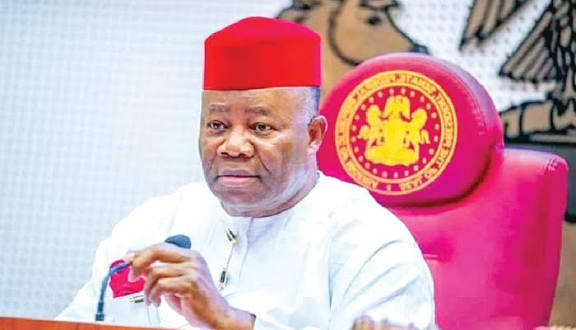
The leadership of Senate President Godswill Akpabio has unfolded within that atmosphere. His tenure has attracted debate and criticism, as is common in public life. Yet beyond the noise lies a broader question: what has this Senate achieved, and how has it positioned the legislature within Nigeria’s democratic structure?
One of the most notable shifts under Akpabio has been the tone of engagement between the National Assembly and the executive arm of government. After years marked by visible friction, the 10th Senate has operated with a more cooperative approach toward the administration of President Bola Ahmed Tinubu. Supporters argue that this has reduced gridlock and allowed government business to move more steadily.
This working relationship has influenced the pace of legislative activity. Within two years, the Senate introduced more than 800 bills, passed over 90, and saw dozens signed into law. Among the most consequential measures was the Minimum Wage Act, which raised the national minimum wage from ₦30,000 to ₦70,000 and exempted minimum wage earners from personal income tax. For many households, this represented tangible economic relief.
Tax reform has also featured prominently. The Nigeria Tax Bill and the Nigeria Tax Administration Bill aim to simplify tax processes, expand the tax base, and improve revenue collection. While economic growth depends on many factors, Nigeria’s reported GDP increase from ₦314.02 trillion in 2023 to ₦372.8 trillion in 2024 has been cited by supporters as occurring within a period of closer legislative executive coordination.
Regional development has been another focus. The Senate approved the creation of five Regional Development Commissions covering the South East, South West, South South, North West, and North Central zones. The intention is to speed up infrastructure delivery and social investment in areas that have long complained of federal delays.
At the grassroots level, the Local Government Financial Autonomy Act strengthened councils’ control over their funds, aiming to deepen accountability and reduce dependence on state governments. In education, the Students Loans Act established the Nigerian Education Loan Fund to provide zero interest loans, widening access to higher education.
Akpabio has also taken positions on more contentious issues. He supported the removal of fuel subsidies, a policy long debated for its economic implications. Though unpopular in some quarters, proponents describe it as a step toward fiscal sustainability.
His current role follows earlier public service as governor of Akwa Ibom State and as Minister of Niger Delta Affairs. Those who assess his career point to continuity in his focus on institutional stability and development initiatives.
Ultimately, opinions about Akpabio’s leadership may differ. Critics question aspects of style and alignment; supporters emphasize legislative productivity and stability. What is clear is that his tenure has been defined less by confrontation and more by an effort to maintain cohesion within the legislature.
In a political climate often marked by sharp division, that approach whether one views it as strategic cooperation or cautious alignment has shaped the character of the 10th Senate. History’s judgment will rest not on daily headlines, but on the durability of the laws passed and the institutions strengthened during this period
By Rt. Hon. Eseme Eyiboh, MNIPR
