

Hon. Dominic Okafor Drives Groundbreaking Bill to Preserve Nigeria’s Indigenous Culture and Traditional Knowledge

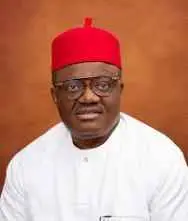
Hon. Dominic Okafor Drives Groundbreaking Bill to Preserve Nigeria’s Indigenous Culture and Traditional Knowledge
By Jennifer Ndukwe
In the heart of Nigeria’s southeast, a powerful legislative effort is unfolding, one that aims to reclaim, preserve, and promote the cultural soul of the nation. Hon. Engineer Dominic Ifeanyichukwu Okafor, the House of Representatives member representing the good people of Aguata Federal Constituency in Anambra State, has taken a visionary step with the introduction of a bill seeking to establish the National Research Institute for Traditional Art, Culture, and Medicine in the ancient town of Igbo Ukwu.
The bill, which recently scaled its second reading in the House, is already drawing attention across the country for its bold ambition to bridge the gap between tradition and modernity while positioning Nigeria as a continental leader in cultural scholarship and Indigenous medical research.
Why Igbo Ukwu? A Town Steeped in Time
Hon. Okafor explained that one of the primary motivations behind this bill is the lack of documented evidence of many African cultural treasures. For Him, the proposed location of the institute is no coincidence. Igbo Ukwu is not just any town, it is one of Africa’s most historically significant archaeological sites, famously known for the Igbo Ukwu bronze artifacts that date back as far as the 9th century AD. Igbo ukwu is regarded as the ancestral home of the Igbos.
“Many people don’t realize that Igbo Ukwu put us on the global map long before we ever thought of it,” Okafor explained. “Three major archaeological excavations were carried out there, and the findings, particularly the bronze works, continue to fascinate scholars around the world.”
Today, the town hosts the Igbo Ukwu Museum, originally built by a revered son of the soil, the late Chief Timothy Chukwubunna Umenweni, also known as Chief Umenweni Ikenga Igbo-Ukwu, who donated it to the state government on 29th December 1989. The museum is run by the Anambra state government through the Ministry of Youths, Sports and Culture., the museum remains a centerpiece of cultural pride. The town is also home to the Yam House, constructed in 2005 by the Federal Ministry of Culture, which serves as the venue for the annual Igbo New Year festivals.
With these cultural monuments already in place, Hon. Okafor believes Igbo Ukwu is the perfect foundation upon which to build the future of Nigeria’s traditional knowledge preservation.
Saving a Heritage on the Brink
The core of the bill is not just about bricks and mortar, it is about knowledge. Hon. Okafor expressed deep concern about the gradual disappearance of Nigeria’s oral traditions, cultural practices, and medicinal wisdom, which he says are vanishing due to a lack of proper documentation.
“One of the challenges facing developing countries is that we often don’t document our cultural heritage,” he said. “We allow it to fade, and once the custodians pass on, much of that knowledge is lost forever.”
He cited the example of his late father, a local healer who had a remarkable herbal remedy for convulsions in children. “People would bring convulsing children to our house, and my father would go into the bush, pick some leaves, prepare them, and give them to the child. Within hours, the child would recover. But he passed away almost two decades ago, and even I don’t know what those herbs were. That knowledge died with him.”
This, he said, is precisely why a dedicated research institute is critical, to ensure that valuable traditional practices are preserved, studied, validated, and potentially integrated into modern healthcare systems.
Culture, Medicine, and the Power of Documentation
Hon. Okafor envisions the institute as a multidisciplinary center where scholars, researchers, cultural custodians, and medical experts can collaborate to bridge the gaps between indigenous knowledge and scientific research.
“Traditional medicine is very efficacious in many cases,” he said. “But without proper documentation, dosage regulation, and scientific testing, we can’t pass it on or integrate it into modern systems safely.”
The bill proposes a facility equipped with modern laboratories and academic resources that will not only study these practices but also publish research findings, offer training programs and serve as a hub for indigenous knowledge across West Africa.
“This isn’t just for nostalgia,” he added. “This is for posterity, for education, for healthcare, and nation-building.”
Economic, Educational, and Diplomatic Benefits
Beyond the academic and cultural importance, Hon. Okafor stressed the economic and diplomatic potential of the proposed institute.
“As someone who is a core member of the House Committee for Culture and Economy, I can tell you that culture is now a serious economic driver globally,” he said.
“When I visited Israel some years ago, I saw tourists paying just to look at rivers and rocks, because those places were culturally significant. We have the same potential here.”
He believes that with proper development, the institute could attract tourists, researchers, and investors, creating ripple effects across the hospitality, education, and health sectors. Locally, it would spur employment, boost real estate, and offer new business opportunities to residents of Igbo Ukwu and surrounding communities.
“People will move there for work, students will come for study, and the entire area will benefit,” Okafor said. “It will be a game-changer for the southeast and Nigeria.”
A Vision Rooted in Identity
At the heart of Hon. Okafor’s legislative push is a desire to reconnect Nigerians with their roots.
“In this age of migration and globalization, many of our children are growing up far from home, some don’t speak our language, don’t understand our customs,” he said. “If we can document our culture and make it accessible in print, online, in classrooms, we give them a chance to know who they are and where they come from.”
He emphasized that the institute will serve not only as a center of learning but also as a symbol of cultural pride and resilience, a place where the past is honored, the present is studied, and the future is shaped.
A Vision for Nigeria’s Cultural Renaissance
Hon. Okafor concluded by highlighting the broader national significance of the bill.
“This is not just about Igbo Ukwu or Anambra State. It is about reclaiming our identity and heritage as Nigerians. The research and documentation will ensure that our traditions live on, not only in stories but inaccessible knowledge for generations to come.”
With the bill currently progressing through the legislative process, many Nigerians Many believe it could usher in a long-overdue cultural awakening and restore pride in Nigeria’s rich, diverse heritage.
If passed into law, the National Research Institute for Traditional Art, Culture, and Medicine could mark the beginning of a new era in Nigeria—one that respects the wisdom of the past while building bridges to the future.
And for Hon. Dominic Okafor, this isn’t just another bill, it is a personal mission.
“I always say I represent the good people of Aguata, and I proudly acknowledge that among them is the performing Governor of Anambra State, Professor Chukwuma Charles Soludo. But beyond our local pride, this bill is about Nigeria—about placing our culture on the world stage and building a future that honors our past.”
