
Nigeria and the European Union have agreed to deepen cooperation in key areas such as security, trade, energy, and migration following their 8th Ministerial Dialogue held in Abuja on Monday.
Nigeria and the European Union have reaffirmed their commitment to closer ties after a successful 8th Nigeria EU Ministerial Dialogue held on Monday, 23 March 2026, at the Ministry of Foreign Affairs in Abuja.
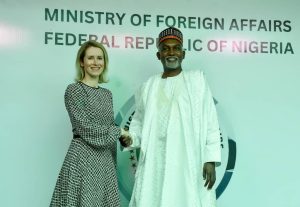

The meeting was led on the Nigerian side by the Minister of Foreign Affairs, Ambassador Yusuf Maitama Tuggar, while the European Union delegation was headed by Kaja Kallas, the EU High Representative for Foreign Affairs and Security Policy. Senior government officials and representatives from both sides attended the talks.
The dialogue provided an opportunity to review ongoing cooperation and explore new areas of partnership, with a focus on practical outcomes that benefit citizens.
In his remarks, the Foreign Affairs Minister described the Nigeria–EU relationship as long standing and important, built on mutual respect and shared interests. He noted that the meeting’s theme, “Partnership for Sustainable Development and Security,” reflects both sides’ intention to deliver real results.
Kallas reaffirmed the EU’s commitment to Nigeria as a key partner in Africa, highlighting ongoing work in areas such as peace and security, trade, digital development, climate action, and migration.
Security discussions focused on counterterrorism, maritime safety in the Gulf of Guinea, and stability in the Sahel region. Nigeria appreciated the EU’s continued support, including assistance to the Multinational Joint Task Force, and welcomed plans to strengthen cooperation in defence and security.
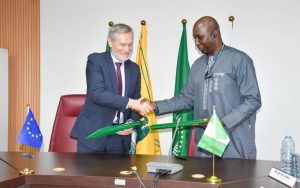

Both sides also stressed the need for joint regional and international efforts to address rising security challenges in West Africa, including support for ECOWAS.
On the economy, the EU remains one of Nigeria’s largest trading and investment partners, with over 200 European companies operating in the country. Both parties agreed to expand cooperation beyond oil and gas into agriculture, manufacturing, and the digital economy. The EU also highlighted ongoing investments in infrastructure, healthcare, agriculture, and energy.
Energy and climate issues were also discussed, with both sides calling for a balanced approach to the transition to renewable energy. Nigeria raised concerns about how new EU carbon policies could affect developing countries. They agreed to continue discussions on climate funding, technology transfer, and fair transition measures.
The dialogue recognised Nigeria’s growing role in digital innovation and called for stronger collaboration in areas such as research, digital payments, and support for startups, including participation in EU programmes.
On migration, both sides called for fair and humane approaches. Progress was made on a Nigeria–EU Readmission Agreement, alongside discussions on legal migration, labour mobility, and efforts to tackle human trafficking and irregular migration.
Nigeria also acknowledged EU support for displaced persons and humanitarian efforts, with both sides agreeing to strengthen cooperation in providing long term solutions.
At the end of the meeting, Nigeria and the European Union restated their commitment to working together across key sectors, including security, trade, governance, migration, and development.
The dialogue marks another step in the growing partnership between both sides, with a shared focus on turning agreements into practical results.
Signed:
Kimiebi Imomotimi Ebienfa,
anipr Spokesperson
Ministry of Foreign Affairs, Abuja
Monday, 23 March 2026